three green bullets

Research and development

In 2012, research and development costs recognized as an expense amounted to NOK 247 million compared to NOK 248 million in 2011. In addition, corresponding costs for Extruded Products, which is reported as discontinued operations in Hydro's financial statements, amounted to NOK 191 million, down from NOK 260 million in 2011.

The greater part of our R&D expenses relates to our in-house research organization, while the remainder supports work carried out at external institutions. See note 14 Research and development for more information. Our main R&D centers are in Årdal (primary aluminium technology) and Sunndal (alloys and casting) in Norway, Bonn in Germany (Rolled Products) and Toulouse in France (Building Systems).

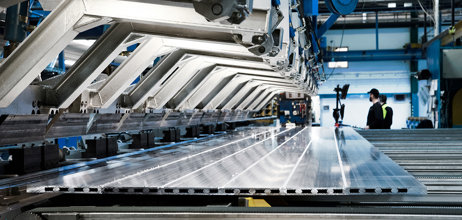
In Hydro, research and development are going hand-in-hand with full-scale production. Our technology efforts are concentrated on these three areas:

  • Making products that promote the use of aluminium and sustainable development
  • Developing the world's best electrolytic technology - the core of the aluminium company
  • Using R&D and technology to ensure optimal operations

In our industry, we must start developing today the technology we will be using 10 or 20 years down the road. That's why we are working to maintain progress, unaffected by the fluctuations of the business cycle. Smelter technology, alloys with special properties and buildings that are energy-neutral during operation are among the areas we are developing together with optimized operations throughout our value chain.

Starting in 2012, all business areas are responsible for their own technology development and execution of their respective technology strategies. As part of the new organizational model, a corporate technology office was established to ensure a holistic and long-term approach to Hydro's technology strategy and agenda. The technology office leads an internal R&D network with representatives from the business areas, and supports the corporate management board in developing overall research and technology priorities and strategies.

We aim at developing improved beneficiation and refinery processes for our Bauxite & Alumina business in order to enhance efficiency in the use of raw materials as well as allowing us to utilize a greater portion of the marginal bauxite ore. We are continuously working to reducing energy costs and carbon footprint through process improvements, heat recovery and alternative energy sources. Bauxite residue (also known as red mud) is an environmental concern for the alumina industry. We use state of the art dry stacking technology for our bauxite residue depositing and have ambitions to improve further by implementing new dry disposal technology.

The primary aluminium plants in Sunndal, Norway and Qatalum, Qatar are using Hydro's proprietary electrolytic process technology. Our next generation technology, HAL4e, has been thoroughly tested in six full-scale production cells. We are now developing this technology further. HALsee (HAL super-efficient energy) is targeting a maximum of 12 kWh/kg aluminium produced. The R&D in Primary Metal is also key in strengthening competitiveness by helping improve the cost position at our primary plants. Prioritized tasks are operational support, implementation of new technology in existing activities as well as development of next-generation electrolysis technology.

Implementing and commercializing innovative product ideas and concepts are core activities. Innovation often takes place in joint projects with the customer once needs have been identified, or we develop new or improved products based on customer demands. Numerous new products are launched every year. The carbon footprint of our solutions is gaining increasing attention and relevance, especially when looking at new applications of aluminium and when improving the environmental performance of existing ones.

Updated: March 15, 2013
Tip a friend
Close

Tip a friend

Research and development

Close

Contact

Your message has been sent