The long road to Siberia


(Nov. 26, 2002) "Will the foundation be ready in time? How many weeks will transportation across Siberia take? What about customs papers? How many containers are needed? There are lots of questions and many details to be finalized for the project groups working on the modernization of the large RusAl plant in the south-east of Russia - with Hydro as a partner.


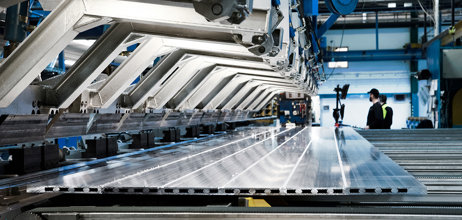
MODERNIZATION: The present casting equipment for extrusion ingot at the Sayanogorsk metal plant is due for modernization. (Photo: Dag Sunnanå)

There was hectic activity in the conference room in the offices connected to Russian Aluminium's plant in Sayanogorsk in the last full week of October. A delegation from Hydro Aluminium had come to a kick-off meeting to discuss the execution of a project which will provide the electrolysis plant with a state of the art casting center for extrusion ingot.

The delegation, led by Torkild Tyvold, also included Karl Anglevik, Arnt Bakken, Tore Henriksen, Geir Olav Ånesburg and Manfred Hatheuer. Together they represented Hydro Aluminium Metal products, Hycast and Austrian Hertwich Engineering. But at the meetings with their Russian partners, they function as a single group.

This was particularly underlined by Manfred Hatheuer from Hertwich. This firm has undertaken a number of assignments for and with Hydro Aluminium in connection with casthouse upgrades, dating back many years - more precisely since Sunndalsøra was built 12 years ago.

TO SIBERIA: The technical collaboration agreement on the upgrade of the casthouse at RusAl's aluminium metal plant in Sayanogorsk is the first major agreement between Hydro Aluminium and a Russian aluminium company.


"Sunndal was the definitive breakthrough," says Hatheuer. "We have developed a good partnership, where Hydro and Hertwich have become well known for their specialties: Hydro and Hycast focus on casting, while we take care of homogenization plants, cutting and packaging."

Hertwich plans to have two men stationed in Sayanogorsk from the beginning of May to assemble the components. Training programs will also be set up. Hatheuer estimates that the final hand-over will be at the end of 2003.

"The cost of our deliveries will amount to nearly four million euro, including spare parts. The agreement with RusAl in Sayanogorsk is important for us," says Manfred Hatheuer.

Hycast is also involved

Personnel from Hycast will also be stationed for periods at Sayanogorsk in connection with assembling casting tables and other equipment. Chief engineer Tore Henriksen expects the casting equipment to arrive in Siberia 9 May.

Assembly will start immediately afterwards. Two men from Hycast will be there for four weeks, and four will be in place as of 9 June for two weeks.

THE PROJECT STAFF: The Hydro delegation (from the left) Manfred Hatheuer from Hertwich, Karl Anglevik and Torkild Tyvold, both from Hydro Aluminium, and...


Idar Kjetil Steen, who is head of Hycast's project department, adds that take-over has been set for 20 June. After this date, regular follow-ups will be carried out to ensure that the equipment works according to specification.

New operational routines

For Hydro's project manager Torkild Tyvold, the meetings in Sayanogorsk represent the final go-ahead signal to start production of the agreed equipment. The progress plan had to be completed, and the Russian partners have specified what will be done before the equipment arrives.

Another important factor is training in new operational routines. The employees at the casthouse need to know how to handle the equipment in order to produce extrusion ingot of the same quality as in the rest of Hydro's system. Key words in this connection are safety routines and order.

... Arnt Bakken from Hydro Aluminium, Geir Olav Ånesbug from Heggset Engineering and Tore Henriksen from Hycast. (Photo: Dag Sunnanå)


Tyvold expects the delivery of ingots from the new plant from the fourth quarter of 2003:

"We must be prepared for some customers being sceptical about Russian metal, but I don't see this as a major risk. Sayanogorsk already produces a good standard of ingot. Deliveries from this plant will be a new and important source for Hydro as a global aluminium company, particularly in connection with the Asian market. This is where the future potential lies.

The Siberian source will come into the picture around the same time as the new metal plant in Sunndalsøra will start its larger deliveries to the European market. Together with the Kurri Kurri smelter in Australia, Hydro will, therefore, be able to build up its market in Asia faster than would otherwise have been possible," underlines Torkild Tyvold.

FACTS
on Hydro and RusAl

  • Hydro Aluminium has traded with Russian aluminium producers for more than ten years, with annual imports to Hydro's network of around 200,000 tonnes. Nearly 15 percent of the world's production of primary aluminium takes place in Russia.
  • Negotiations on a technical collaboration agreement with RusAl, the second largest producer of primary aluminium in the world, lasted several years. The agreement on the upgrade of the aluminium plant in Sayanogorsk is the first major agreement between Hydro Aluminium and a Russian aluminium company.
  • The upgrade in Sayanogorsk will take place in two phases. The first, to be completed late in 2003, will increase annual production capacity with 80,000 extrusion ingot. In phase two a couple of years later, this will be doubled to 160,000 tonnes a year.


Read also:

"We have something to strive for"
RusAl plans to be biggest
 

Background:

Long-term production agreement with Russian Aluminium (2002-07-24)