RusAl plans to be biggest


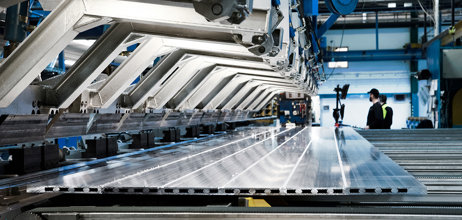
RUSSIAN METAL: Efforts to make Russian aluminium more attractive in the West will intensify. (Photo: Dag SunnanĂ¥)


(Nov. 26, 2002) "In ten years time we expect to be the world's largest producer of primary aluminium, bigger even than Alcoa," says Alexandre Boulygine, who, together with Oleg Deripaska, leads Russia's largest aluminium company - RusAl.

Boulygine makes it quite clear that the company does not consider further processing to be the way to go. The electrolysis plants are too far from the markets. Their main focus will continue to be on the production of primary aluminium.

On the other hand, a greater involvement in energy through ownership interests will be a natural development, not least due to the availability of cheap energy in Siberia.

Asked whether the Russian aluminium industry has taken final shape, he says:

"The formation of three owner groups in Russia is not coincidental, rather it is the result of careful planning. Perhaps as well planned as Hydro Aluminium in its present form?" he adds with a smile.

LEADER: 36-year old Alexandre Boulygine represents the young, energetic generation of Russian business leaders.


In RusAl efforts are focused on ensuring access to raw materials. For this reason, an offer has been made for the Indian company Nalco, which produces alumina, and is currently under privatization. RusAl already has ownership interests in the bauxite mines in Guinea and alumina plants in Russia, Ukraine and Romania.

Power
Boulygine and his colleagues in RusAl also have other companies under consideration, but are not primarily interested in purchasing interests in the western aluminium industry. Their focus is to ensure the supply of raw materials for production of primary aluminium at their four major plants in Bratsk, Krasnojarsk, Novokusnetsk and Sayanogorsk, all of which are situated near large power plants.

Preliminary work has been carried out in Sayanogorsk to expand capacity from the present 400,000 tonnes to around 650,000 tonnes. However the available power would make it possible to expand further to 800,000 tonnes. Boulygine is keen to utilize the existing infrastructure in Siberia, rather than building greenfield plants.

Meanwhile the plants are undergoing a continual, extensive improvement process. The end products shall not be unmistakably Russian; both appearance and packaging shall make ingots, sheet ingots and extrusion ingots as attractive as metal produced in the west. Major efforts are also being made to reduce harmful emissions and attain process certification.

Not afraid of China
Boulygine also follows developments in the eastern markets closely. He regards China as a natural market for Russian aluminium. He does not believe that the Chinese will expand their electricity output specifically to produce aluminium. The enormous country needs its energy for more "civilian" purposes. Its electricity will also become too expensive for aluminium production.

"There are several factors the Chinese have to take into consideration," Boulygine points out. The present electricity net would not be able to transmit the amount of electricity needed for aluminium production. Besides joining the World Trade Organization will also entail restrictions. All these factors will slow down the development of China's aluminium industry

However, at present the internal improvements in RusAl are at the top of Boulygine's list of priorities. In this connection the agreement with Hydro Aluminium on the upgrade of extrusion ingot production at the metal plant Sayanogorsk is one, but very important, step for RusAl.


FACTS
about Russian Aluminium (RusAl)
  

  • RusAl was established in March 2000, and is now the world's second largest producer of aluminium. The company accounts for 75 percent of Russia's total production of primary aluminium and 10 percent of the world's total aluminium.
  • RusAl also encompasses a bauxite mine, three alumina refineries, four electrolysis plants, three rolling mills, two foil plants and a factory for producing aluminium drinks cans. Most of these operations are ISO 9000-9002 certified.
  • The company has nearly 70,000 employees and its main office is in Moscow.


Read also:

The long road to Siberia
"We have something to strive for"
 

Background:

Long-term production agreement with Russian Aluminium (2002-07-24)