


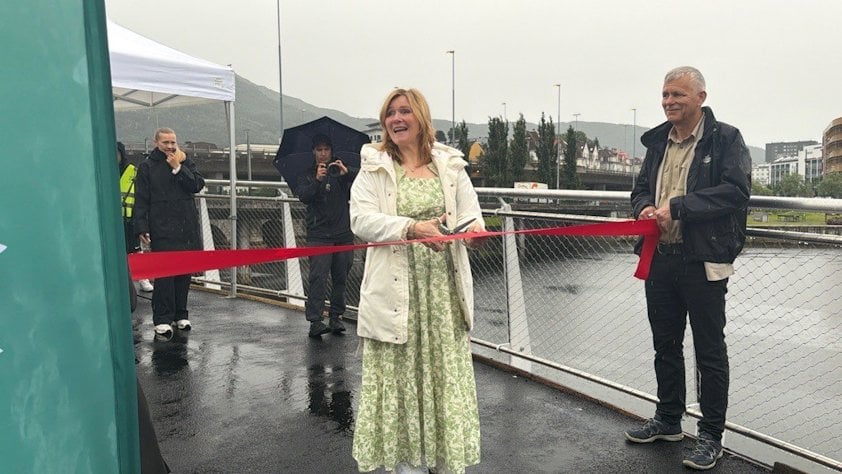
The bridge opened on July 2, 2026, connecting Marineholmen with the areas around Puddefjorden in central Bergen.
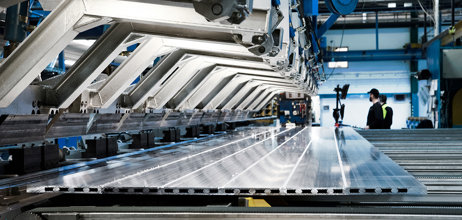
Developed by GC Rieber Eiendom, the bridge was designed, built and installed by Leirvik in collaboration with Multiconsult. Hydro supplied the extruded aluminium profiles, while Speira supplied the aluminium sheets. Consto carried out the associated civil works, and the City of Bergen will be responsible for the operation and maintenance of the bridge.
“Marinebroen shows what is possible when we collaborate closely with developers and suppliers, are willing to rethink infrastructure projects, and use recycled materials. Aluminium can be recycled again and again without losing its properties, combining low emissions with long service life. This makes it well suited to reducing emissions in the construction sector,” says Eivind Kallevik, President and CEO of Hydro.
Documented low-carbon footprint
The aluminium supplied by Hydro in the bridge is based on recycled metal including Hydro CIRCAL, aluminium containing a minimum of 75 percent post-consumer scrap, with a documented low-carbon footprint of around 1.9 kg CO₂ per kg aluminium. This is significantly lower than the global average for aluminium production of 14.8 kg CO₂ per kg aluminium.
By using aluminium that has already been in use, emissions from material production are significantly reduced, without compromising strength or quality. Aluminium can also be recycled repeatedly without losing its properties, making it a key material in a more circular economy.
Lightweight, strong and maintenance free for 100 years
Choosing aluminium also provides practical benefits. The material is lightweight, simplifying transport and installation, and it requires minimal maintenance. The bridge is designed to last at least 100 years.
“As someone from Bergen, it’s inspiring to see more sustainable and innovative materials shaping the city I grew up in. This project shows how a recyclable, lightweight and virtually maintenance free material can contribute to building future infrastructure,” says Kallevik.
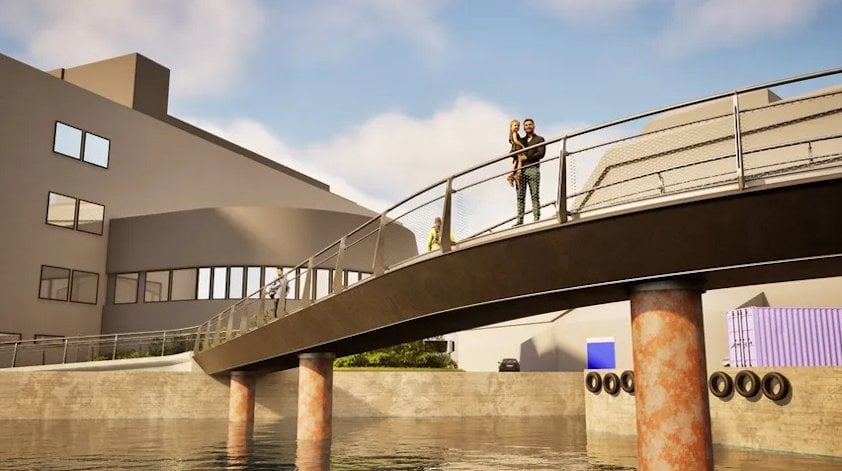
Marinebroen illustrates how aluminium can contribute to more sustainable infrastructure solutions, where requirements for durability, strength and climate performance are high.
About Hydro CIRCAL - recycled aluminium
Hydro CIRCAL is a recycled aluminium made with a minimum of 75 percent post-consumer scrap recovered from end-of-life products such as windows, façades, vehicles and consumer electronics.
The material has a documented carbon footprint of approximately 1.9 kg CO2 per kg aluminium, compared with the global average for aluminium production of around 14.8 kg CO₂ per kg aluminium. Aluminium can be recycled again and again without losing its properties, making it an important material for a more circular economy.
Published: July 2, 2026
