
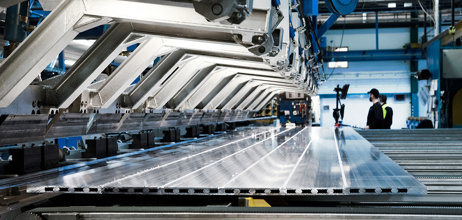
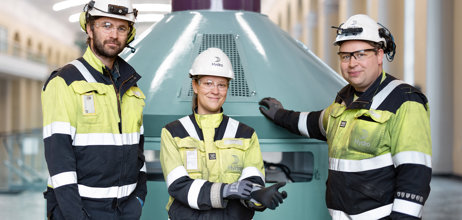


The collaboration between Hydro and NTNU ranges from fundamental research to development, pilot scale testing and the industrialization of new technology. For Hydro, leading universities and research institutions are important both for technology development and for educating researchers and engineers with the expertise the industry needs.
Norway is Europe’s largest producer of primary aluminium and accounts for approximately 40 percent of European production. Aluminium is also defined as a strategically important material for the EU and NATO, reflecting its importance across key industries such as energy, transport, infrastructure, and defense.
“Trondheim is home to some of the world’s leading research environments in aluminium, an area Hydro has been closely involved in for many years. Through these professorships, we aim to strengthen this collaboration and build the expertise needed to support both the future of the aluminium industry and Europe’s long-term competitiveness,” says Hydro President and CEO Eivind Kallevik.
Three professorships in aluminium
The first professorship will be established from August 1, 2027, in mechanical and manufacturing engineering. The position will also lead the NTNU Aluminium Product Innovation Center (NAPIC), which conducts research into aluminium products and processes, and develops new applications for aluminium. Hydro and NTNU will each finance 50 percent of the professorship for the first five years.
In addition, Hydro will fund two endowed professorships. The first will be established in 2028 in alloy development and physical metallurgy. The second is planned for 2030 in electrolysis technology and emission reduction, with a particular focus on modelling of industrial processes, metal production and sustainable production processes.
“Our collaboration with Hydro demonstrates what we can achieve when universities and industry work together with a long-term perspective. The new professorships will strengthen research and education in fields where NTNU already has strong academic environments, while helping to ensure new knowledge can be applied in industry,” says Tor Grande, Rector of NTNU.
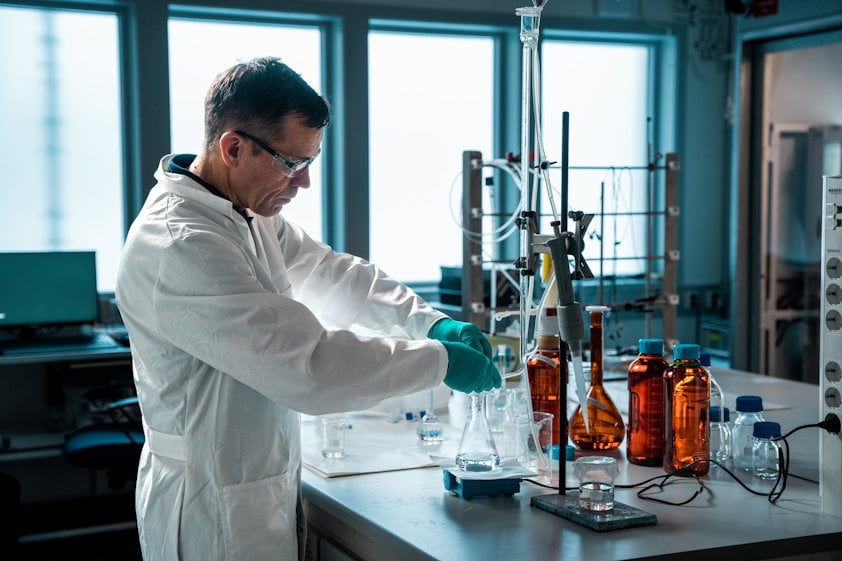
Hydro will fund each of the two endowed professorships for the first five years. Hydro’s total contribution to the three professorships will be approximately NOK 25 million from 2028 to 2034. NTNU will also establish a PhD position associated with each professorship.
Long-term collaboration on technology and expertise
Hydro has developed an extensive technology and research collaboration with NTNU and SINTEF over many years. One example is the development of HalZero, Hydro’s new electrolysis technology, which aims to eliminate direct CO2 emissions from the aluminium production process. Hydro has now successfully produced aluminium using the technology for the first time. However, several years of further development, testing and piloting will be needed before the technology is ready for potential deployment on an industrial scale.
The collaboration is continuing through projects such as FundAl, where Hydro, NTNU and SINTEF recently received NOK 16 million in funding from the Research Council of Norway to further develop the scientific foundation for the new technology.
“Technology development in our industry takes time. If we are to succeed in developing new production processes, new alloys and new applications for aluminium, we depend on strong academic environments and close collaboration between academia and industry. This is a long-term investment in the expertise we need to continue developing our industry,” says Kallevik.
The professorships at NTNU will help ensure continuity and build long-term expertise in areas that are important to the aluminium industry. The collaboration will also support the education of graduates with relevant expertise and strengthen the links between research and industrial challenges.
Research, development and technology
- Hydro works to improve existing products and processes and develop new technologies and aluminium solutions.
- R&D activities include product and process development, advanced computer simulations, analysis and prototyping.
- In 2025, Hydro and the University of Michigan established the CREATe research center, focusing on recycling, extrusion and aluminium technology.
- HalZero is an example of long-term technology development in collaboration with NTNU and SINTEF. The technology aims to eliminate direct CO₂ emissions from the electrolysis process.
Published: November 17, 2026
