When you choose aluminium from Hydro, it's strong, light, durable and climate efficient, making you part of a smarter and more sustainable future. Our climate strategy is to cut our CO2 emissions 30% by 2030. Our aluminium can help you meet your goals, too.
Energy
Hydro has been at the forefront of the energy transition since 1905, transforming industries and societies with renewable energy. Today, we are pioneering the green aluminium transition through renewables and new energy solutions.
Sustainability
We want to contribute to the just and green transition through responsible production, creating circular solutions and delivering net-zero aluminium by 2050 or earlier.
Careers
At Hydro, we put our people at the center of everything we do. By supporting our employees’ growth professionally and personally, we are fostering a community of colleagues who are united in the shared purpose of solving our industries’ most pressing challenges.
Investors
With more than a century of industrial experience, we are enabling the green transition through innovation, technological advances, and a strong commercial mindset.
Media
Working on a story about aluminium? Press releases, photos, stories, facts and figures – you will find everything you need here.
About Hydro
Hydro is a leading aluminium and renewable energy company that builds businesses and partnerships for a more sustainable future. We have 32,000 employees in more than 140 locations and 40 countries.
Aluminium busbars and tubular conductors for electrical systems
Hydro manufactures extruded aluminium busbars, tubular conductors, and flat wire profiles for OEMs and panel builders. Aluminium offers strong electrical conductivity at roughly half the weight of copper, with built-in corrosion resistance and full recyclability.
Share your drawing or performance targets and we will recommend a conductor solution.
What we supply: busbars, tubular conductors, flat wire
Hydro supplies aluminium conductor solutions for OEMs, panel builders and electrical equipment manufacturers, including busbars, tubular conductors and flat wire.
A busbar is a solid conductor used to distribute power in switchgear, cabinets and electrical systems.
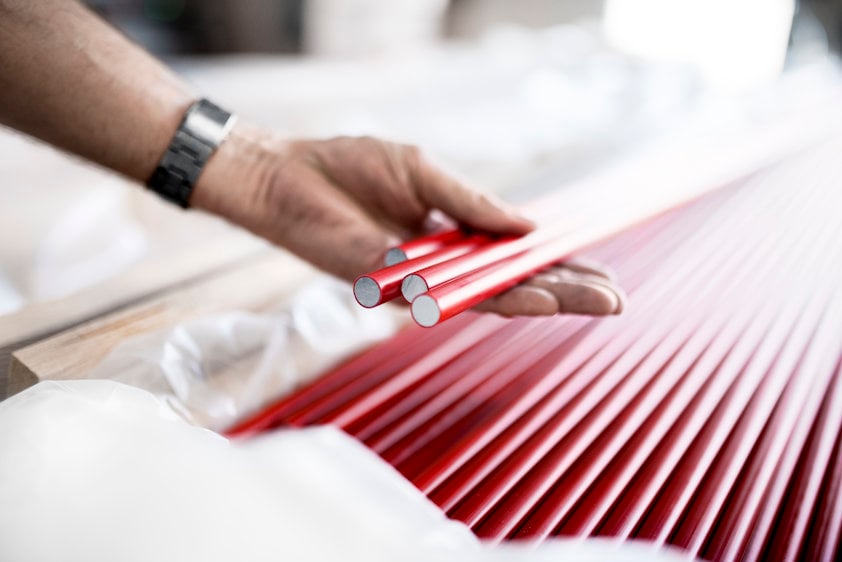
A tubular conductor is a hollow profile used when current carrying capacity, low weight and heat dissipation all matter.
Flat wire is a rectangular conductor format for compact assemblies where space, repeatability and contact surface are important.
Specifications can be configured around alloy and temper, conductivity targets measured in % IACS, dimensions, delivery lengths, surface finish, tolerances and packaging. Hydro can also support cutting, drilling, punching, bending, machining and assembly to simplify installation.
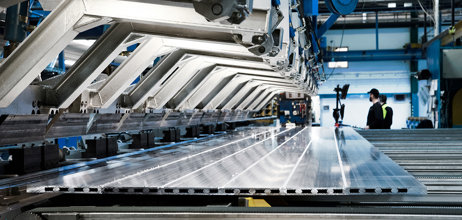
Many conductor solutions are based on extruded aluminium profiles, allowing electrical performance and mechanical function to be designed together. An extruded busbar or tubular conductor can be adapted to the geometry, surface area and connection points of the equipment.
Hydro manufactures busbars and aluminium conductor profiles across multiple countries, in both Europe and North America.
Aluminium as an alternative to copper for busbars and conductors
For many busbar and conductor applications, aluminium offers a practical alternative to copper. The decision to substitute depends on current requirements, connection design, available space, and total cost of ownership. Hydro helps OEMs and panel builders evaluate the switch and design aluminium conductor solutions that meet their electrical and mechanical targets.
Aluminium vs copper conductors: key trade-offs
Point to evaluate
What to consider
Electrical sizing
Aluminium is less conductive than copper by volume, so an aluminium busbar normally needs a larger cross-section for the same current rating. This should be checked early in space-constrained cabinets, switchgear and enclosures.
Weight
Even with a larger cross-section, aluminium conductors are typically much lighter than copper equivalents. This can reduce load on support structures and simplify handling and installation.
Thermal performance
Aluminium conducts heat efficiently, helping temperature differences equalize across the profile. Hollow or extruded busbar designs can also increase surface area and support heat dissipation in enclosed spaces.
Connection design
Aluminium-to-aluminium and aluminium-to-copper joints require correct surface preparation, hardware and torque values. This is often the most important engineering point in substitution projects, and Hydro can advise on joint design.
Fabrication
Aluminium busbars and conductor profiles can be cut, drilled, punched, machined, bent and supplied in customer-specific lengths or kits. Bending and forming depend on the right alloy, temper and bend radius.
Corrosion resistance
Aluminium forms a natural oxide layer that protects the surface in many indoor electrical environments. For outdoor or more demanding environments, surface treatment or coatings may be specified.
Cost
Aluminium is typically less expensive per kilogram than copper, but the final business case depends on the full system design, including profile size, joints, supports, fabrication and installation.
Recyclability
Aluminium is fully recyclable without loss of material properties, supporting circular material flows and lower-carbon product design.
When to consider switching to aluminium busbars
Aluminium is not a direct like-for-like replacement for copper in every design. The right choice depends on available space, current rating, connection design, installation requirements and total system cost.
Consider aluminium busbars
...when weight reduction is a priority, the application allows a larger cross-section, you want to reduce exposure to copper price volatility, or your sustainability targets favor recyclable materials.
Stay with copper
...when space is severely constrained and the larger aluminium cross-section will not fit, or when your assembly process and joint design are already optimized for copper and the cost of re-engineering outweighs the material savings.
Evaluate with Hydro
...when the trade-offs are not clear for your specific application. We can help model the sizing, review connection design, and recommend suitable alloys and tempers.
Aluminium busbars, tubular conductors and flat wire are used in electrical systems where current carrying capacity, weight, thermal performance and efficient assembly are important design factors.
Switchgear and distribution boards: Busbars are used to distribute power safely and efficiently inside switchgear, cabinets and distribution boards.
Panel building and low-voltage assemblies: Aluminium conductors can be configured for compact panel designs, with dimensions, holes, bends and kits adapted to the assembly process.
EV charging infrastructure: Lightweight aluminium conductor solutions can support power distribution in charging systems and related equipment. See also e-charging stations
Renewable energy systems: Busbars and conductor profiles are used in solar inverters, wind power distribution and other renewable energy applications where efficient power transfer and thermal management are important.
Rail and transport electrification: Aluminium conductors can help reduce weight in electrical systems for trains, rail infrastructure and other transport applications. See also modern trains and rail
Industrial power distribution and data centers: Busbars are used in industrial electrical systems and high-demand power environments, including data centers, where reliability, heat dissipation and efficient installation matter. See also data centers
Aluminium alloys for busbars and electrical conductor profiles
Alloy selection is important for aluminium busbars, tubular conductors and other extruded electrical conductor profiles. The right alloy depends on the required balance between electrical conductivity, mechanical strength, formability, contact performance and extrusion efficiency.
High-purity 1xxx aluminium alloys, such as EN AW-1050 and EN AW-1370, are used where electrical conductivity and low weight are the main priorities. These alloys offer high aluminium purity and good corrosion resistance, and can be extruded into profiles, rods, bars and tubes for conductor applications.
For applications that also require higher strength or improved contact performance, EN AW-6101A/B can be a good option. This Al-Mg-Si alloy has slightly lower conductivity than 1xxx alloys, but offers a stronger balance of conductivity, mechanical performance and manufacturability.
Compared with Cu-ETP R220 copper, aluminium conductor alloys have lower conductivity by volume but much lower density. In practice, this means an aluminium busbar usually needs a larger cross-section than copper for the same current rating, but the finished conductor can be significantly lighter.
Alloy / material
Typical role in conductor applications
EN AW-1370-H112
High-conductivity aluminium alloy for busbars and conductor profiles
EN AW-6101-T7
Balanced conductivity, strength and contact properties
EN AW-6101-T6
Higher strength option where mechanical performance is important
Cu-ETP R220
Copper reference material with high conductivity but higher density
Hydro can help select the right aluminium conductor alloy and temper based on conductivity targets, profile geometry, mechanical requirements and production needs.
Frequently asked questions (FAQ)
An aluminium busbar is an extruded conductor profile used to distribute electrical current in switchgear, distribution boards, and power systems. Busbars are available as solid bars, tubular conductors, or flat wire profiles.
Busbars are commonly made from copper or aluminium. Aluminium busbars offer roughly half the weight of copper at equivalent conductivity, with strong corrosion resistance and full recyclability. Common aluminium alloys for busbars include those in the 1xxx series (high conductivity) and 6xxx series (higher strength).
In many applications, yes. Aluminium busbars are widely used in switchgear, panels, and power distribution as a lighter, cost-effective alternative to copper. The busbar cross-section is typically larger, but weight and material cost are lower. Joint design and surface preparation need to be adapted for aluminium. Hydro can help you evaluate whether substitution fits your application.
Aluminium reduces weight by roughly 50%, is fully recyclable, and is typically more cost-stable than copper. Extruded aluminium profiles can be optimized for thermal performance in enclosed spaces. Final sizing depends on current rating, temperature rise, and connection method.
Yes. With the right alloy and temper, aluminium busbars can be bent without cracking. See our guide to the best aluminium alloys for bending.
Yes. Alloy, temper, dimensions, and delivery length are specified per project. Share your requirements and we will confirm availability and options.
A tubular busbar is a hollow aluminium conductor profile that offers improved stiffness-to-weight and heat dissipation compared to solid bars. Tubular conductors are used where mechanical layout or thermal requirements favor a hollow cross-section.